

“Cleanliness is next to productivity.”
This saying holds more truth than ever, especially in today’s fast-paced, competitive corporate world.
A study published in The Australian Psychological Society Journal (2014) highlights how a clean, organized environment can significantly reduce stress levels and foster mental clarity, ultimately boosting workplace productivity.
The research found that employees working in clean environments reported a 15% increase in job satisfaction and a 12% boost in overall productivity. Additionally, the study noted a 46% reduction in sick days among employees in well-maintained workplaces.
These findings underscore the critical importance of maintaining a clean office environment.
Despite these compelling statistics, many businesses consider deep cleaning a non-essential expense rather than a strategic decision.
This is where building a strong business case becomes essential.
This guide shows you how to build a business case for deep cleaning services in Sydney. If you’re short on time, don’t worry. We included a downloadable checklist to make the process easier.
Let’s get started!
Why a Business Case Is Necessary
In corporate environments, decisions are rarely made lightly, especially when budgets are tight. Stakeholders often raise questions like:
- “Isn’t our regular cleaning enough?”
- “What’s the return on investment?”
- “Why now?”
A well-prepared business case addresses these concerns, helping you demonstrate the tangible and intangible benefits of deep cleaning services.
From improving employee health to ensuring compliance with workplace hygiene standards, a strong business case positions deep cleaning as a value-driven necessity.

Pro Tip:
Use visual aids like this free downloadable checklist to make your case even more compelling.
Key Elements of a Business Case
1. Problem Statement

Begin by outlining the issues your organization is currently facing. For example:
- High employee sick days linked to poor office hygiene.
- Complaints about cleanliness from clients or staff.
- Risk of non-compliance with health and safety regulations in Sydney.
Tie these directly to business risks. For instance, mention how reduced productivity impacts the bottom line.
Example:
“Our office experienced a 15% increase in sick days over the past year. Poor air quality and inadequate cleaning protocols contributed to the problem. As a result, productivity decreased, and operational costs increased.”
2. Proposed Solutions
Introduce professional deep cleaning as the solution to these challenges.
Explain how deep cleaning differs from standard cleaning:
- Standard Cleaning: Focuses on visible surfaces.
- Deep Cleaning: Targets hidden dirt, bacteria, and allergens in high-touch and hard-to-reach areas.
Highlight specific benefits for Sydney businesses, such as:
- Compliance with local workplace safety standards.
- Enhanced employee health and satisfaction.
- Improved client impressions of your workspace.
Make it local. For example, highlight how Sydney’s humid climate makes deep cleaning critical for preventing mold buildup.

3. Cost Analysis
Investing in deep cleaning services offers more than just a cleaner workspace—it delivers measurable financial benefits.
For a typical office:
$1,000 annual investment in deep cleaning can result in $2,500 in savings from reduced sick days
An additional $3,000 from boosted employee productivity.
This means a total ROI of over 450%!
To make this even clearer, here’s a visual breakdown of the cost versus ROI:

This bar graph illustrates the financial benefits of deep cleaning services, comparing the initial cost with savings from reduced sick days and increased productivity.
Data derived from workplace productivity studies and Stardust Cleaning’s insights.
4. ROI and Intangible Benefits:
When pitching deep cleaning services, the numbers tell a compelling story, but the intangible benefits seal the deal.
Here’s how these elements work together to create a strong case for investing in workplace cleanliness:
Tangible ROI: The Numbers That Matter
Investing in deep cleaning doesn’t just improve aesthetics—it delivers measurable results:
- 46% Reduction in Sick Days: Fewer illnesses mean healthier, more productive employees.
- 12% Boost in Productivity: A clean workspace energizes teams to perform their best.
- Extended Asset Lifespan: Proper cleaning preserves your office equipment, reducing long-term costs.
Intangible Benefits: Beyond the Numbers
Sometimes, the most valuable returns aren’t easily quantifiable:
- Happier Employees: A clean office boosts morale and shows your team you care.
- Enhanced Corporate Image: Impress clients and visitors with a spotless workspace.
- Healthier Environments: Cleaner air and surfaces contribute to better overall well-being (because who doesn’t love a fresh-smelling office?)

View how your investment pays off through a cleaner, healthier, and more productive workspace.
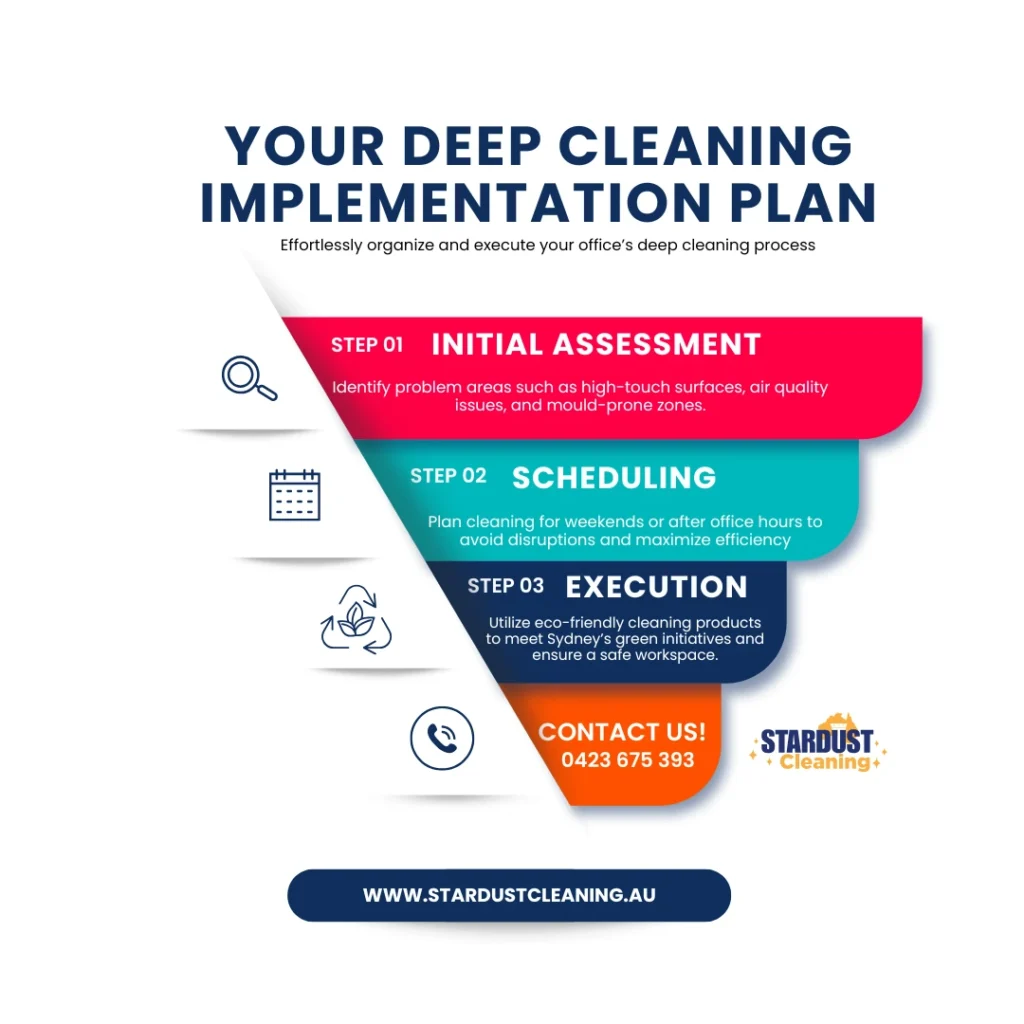
5. Implementation Plan
Address stakeholder concerns about disruption by outlining a seamless implementation strategy:
Step 1: Initial Assessment
The first step is to identify problem areas in your workspace.
High-touch surfaces, air quality issues, and mould-prone zones are common culprits that require immediate attention. Conducting this assessment helps you pinpoint where deep cleaning can make the most impact.
Step 2: Scheduling
To minimize disruption to daily operations, plan the cleaning process for weekends or after office hours.
This ensures your business runs smoothly while the cleaning team works effectively in the background.
Step 3: Execution
The final step is execution, where the magic happens! Use eco-friendly cleaning products and methods to align with Sydney’s green initiatives.
This not only ensures a healthier workspace but also contributes to a sustainable future.
How to Present the Business Case

When presenting the case to decision-makers:
- Use visual aids, such as cost-benefit analysis charts and images showing the difference between standard and deep cleaning results.
- Tailor the presentation to the audience:
- Executives: Emphasize ROI and strategic benefits.
- Procurement Teams: Focus on vendor reliability and compliance.
- Operations Managers: Highlight efficiency and convenience.
Overcoming Common Objections

“We already have a cleaning service.”
Response: Explain that standard cleaning maintains surface-level cleanliness, while deep cleaning targets the root causes of poor hygiene, such as allergens and bacteria.
“It’s too expensive.”
Response: Emphasize the ROI. A cleaner workplace reduces sick days and improves productivity, leading to long-term savings.


“It’s unnecessary.”
Response: Use examples from Sydney businesses in high-traffic sectors where deep cleaning proved essential (e.g., coworking spaces or healthcare offices).
A business case for deep cleaning services isn’t just a document—it’s your opportunity to secure a healthier, more productive, and compliant workplace.
To increase the chances of your proposal’s approval, focus on addressing key challenges, demonstrating a tangible return on investment (ROI), and presenting a clear and actionable plan.
Ready to get started? Contact Stardust Cleaning for a free consultation and discover how our professional deep cleaning services can transform your Sydney office.